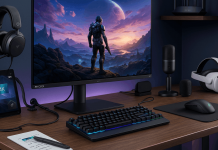
Portable gaming now spans pocket-sized retro machines, hybrid systems that dock to televisions, and Windows-powered mini-PCs that rival full desktops.
Because each category solves a different problem, quick entertainment on a crowded bus, AAA performance at the hotel, or nostalgia on a lunch break, picking “the best” console depends on how you actually play.

Use the framework below to turn a crowded market into a short, confident shopping list.
Portable Gaming in 2025: Rising Options, Clear Trade-Offs
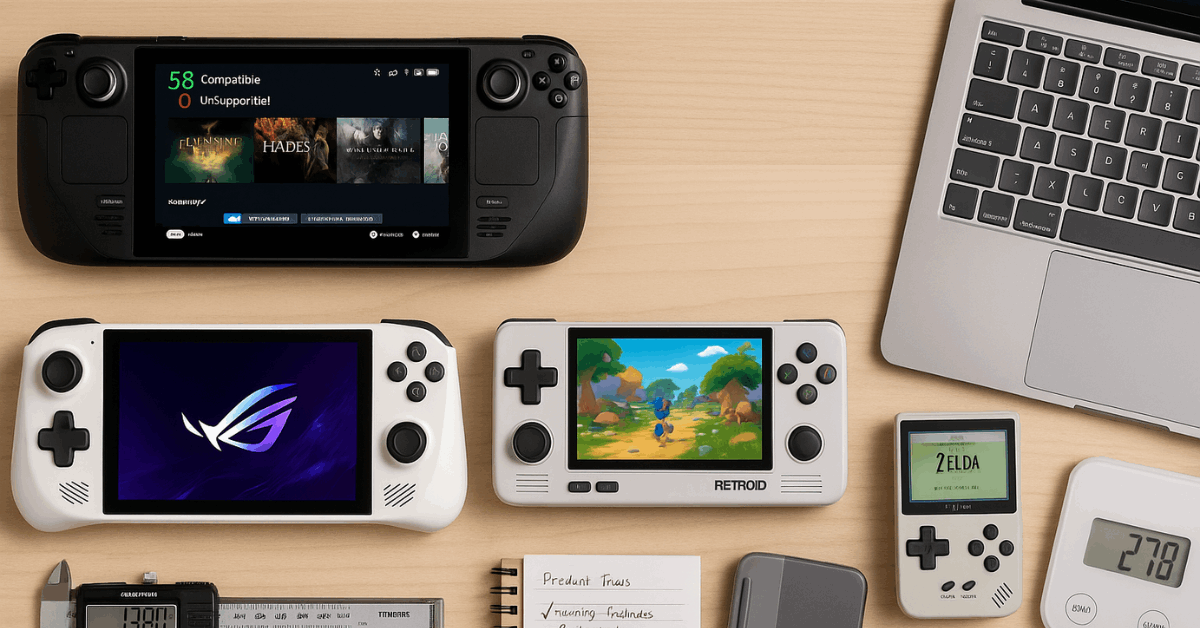
The handheld scene has exploded worldwide, led by the Nintendo Switch 2, Valve’s Steam Deck OLED, and Windows devices such as the Asus ROG Ally X.
Meanwhile, brands like Retroid, Anbernic, and Miyoo cater to retro enthusiasts with Android or Linux pocket consoles.
Each platform juggles power, battery life, game libraries, and price in different ways, so a step-by-step approach prevents costly mistakes.
Map Your Play Environment
A console succeeds or frustrates primarily because of where you use it.
Home-First Players
Heavy devices such as the Steam Deck OLED or the ROG Ally X shine when you lounge on the sofa, sit near a charger, and value big screens over featherweight portability.
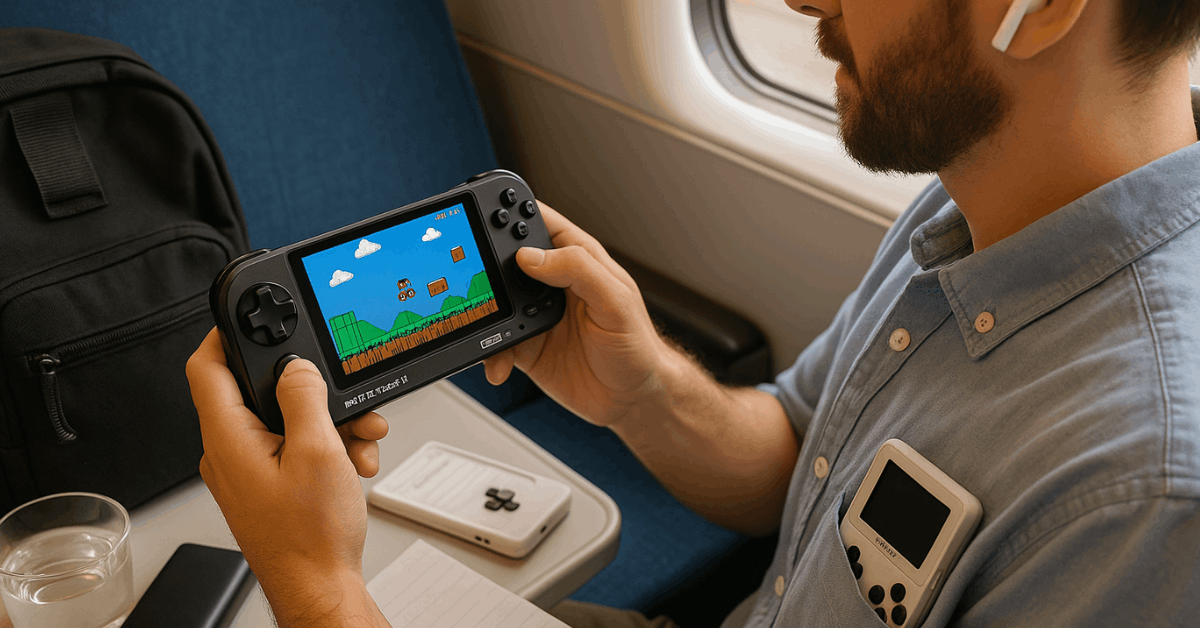
Commuters and Frequent Flyers
Slim hybrids, Switch OLED, Switch Lite, Retroid Pocket 5, slide into backpacks, survive quick sessions between stops, and recharge from a power bank during layovers.
Pocket Minimalists
Tiny units like Miyoo Mini Plus, TRIMUI Smart Brick, or Game Kiddy GKD Pixel 2 literally fit jeans pockets, trading horsepower for true “anywhere” convenience.
Match the device bulk to the longest stretch you expect to hold it without setting it down.
Select a Display That Keeps Eyes Fresh
Screen characteristics change how long you can play without fatigue and how dramatic visuals feel.
| Size Range | Typical Uses | Pros | Cons |
| 2.4–3.5 in | Retro verticals, clamshells | Ultra-portable, sharp at low resolution | Text can be tiny, widescreen titles letterbox |
| 5–7 in | Balanced hybrids (Retroid Pocket 5, Switch OLED) | Comfortable reading distance, fits most bags | Moderate battery drain |
| 7–8 in | Performance handheld PCs | Immersive scale, easier strategy controls | Heavier, faster power draw |
Display tech considerations:
- OLED: Deep blacks and vivid color elevate art styles in titles like The Legend of Zelda: Echoes, but shorten battery runtime by 10–20 percent compared to LCD equivalents.
- Refresh Rate: A 90–120 Hz panel on Steam Deck OLED or ROG Ally X feels fluid in shooters; however, higher refresh demands more watts.
- Resolution Sweet Spot: 1080p balances clarity and performance for most seven-inch screens; pushing 1440p handheld drains battery quickly with marginal sharpness gains on small panels.
Match Game Library to Hardware
Owning a stunning console means little if it will not run the titles you crave.
Exclusive Ecosystems:
- Nintendo Switch 2: The Only platform for Mario Kart World and Zelda Echoes. Backward-compatible with earlier Switch hits.
- PlayStation Portal–Style Remote Devices: Stream the PS5 catalog, but rely on a strong home Wi-Fi connection.
- Evercade Alpha: Delivers authentic arcade compilations through proprietary cartridges—excellent for retro purists.
Open PC Platforms:
- Steam Deck OLED: Accesses Steam, Epic, GOG, plus emulators through Linux; thousands of games are Deck-Verified.
- Windows Handhelds (ROG Ally X, MSI Claw 8): Run every PC launcher, mod, or cloud service, but require Windows maintenance and frequent driver updates.
Mobile-Optimized Retro Systems:
- Retroid, Anbernic, and TrimUI: Boot Android or Linux, support classic console emulators, and sideload touchscreen apps.
- Action step: Create a short list of “must-play” titles, then cross-check compatibility charts to ensure optimal hardware selection.
Balance Performance and Battery Life
Processing muscle and endurance always push against each other, so rank them according to your habits.
| Device | Typical AAA Runtime | Typical Indie Runtime | Adjustable Power Modes |
| ROG Ally X (40 W) | 2–3 hours | 5–6 hours | Turbo, Performance, Silent |
| Steam Deck OLED | 2–4 hours | 5–8 hours | TDP slider in quick menu |
| Switch 2 | 3–4 hours | 4–6 hours | Fixed performance |
Practical tips:
- Lowering the resolution from native 1080p to 720p on the Steam Deck can increase playtime by roughly 30 percent without significant visual loss.
- External 20,000 mAh power banks roughly double handheld runtimes, but add 300g to your carry weight.
- Longer flights reward efficient systems like the Switch Lite or Retroid Pocket 5, which consume power at lower TDPs.
Prioritize Comfort and Controls
A console that aches your wrists will sit unused regardless of specs.
Ergonomic Checkpoints
Grip thickness should allow fingers to curl naturally; flat slabs quickly strain palms. A weight of under 450 g feels manageable for hour-long sessions; weights above 650 g benefit from lap rests or stands.
Button travel and tactile feedback determine how accurately you pull off combos in fighters.
Control Layout Variations:
- Standard Console Style: Switch 2 keeps familiar ABXY face buttons and symmetrical sticks.
- Pro-Grade Extras: Steam Deck adds dual trackpads for cursor control and four rear paddles for custom binds.
- Retro-Focused Simplicity: Miyoo Mini Plus opts for classic D-pad and four buttons—perfect for 2D titles.
Whenever possible, hold display units at electronics shops; if none exist locally, measure hand span against published chassis dimensions and read weight specifications carefully.
Review Operating Systems and Feature Sets
Beyond games, operating systems influence tweaking freedom, updates, and multimedia use.
| OS | Strengths | Watch-outs |
| Nintendo UI | Simple, kid-friendly, instant suspend-resume | Limited customization, aging menu design |
| SteamOS (Linux) | Integrated storefront, performance overlay, easy updates | Some PC games require Proton tweaks |
| Windows 11 | Full desktop software, Game Pass PC, mods | Touch navigation clunky, background tasks eat battery |
| Android 13 + Retroid Launcher | Mobile apps, cloud streaming, flexible emulation | Occasional gamepad mapping hassles |
| Custom Linux (Onion, Garlic) | Fast boot, retro-oriented themes, open-source | Lacks mainstream app ecosystem |
Added perks to note:
- VRR output up to 4K: Switch 2 dock cools internally to push high resolution to living room displays.
- Gyroscopes and Hall-effect sticks: Improve precision while preventing joystick drift on premium models.
- MicroSD Express & NVMe bays: Simplify cheap storage expansion for ever-growing digital libraries.
Spotlight Devices by Use Case
All-Rounders for Most Players:
- Nintendo Switch 2: Hybrid flexibility, rich exclusives, strong third-party support, moderate battery.
- Retroid Pocket 5: AMOLED screen, PS2-level emulation, dual-boot Linux option, and carries easily.
PC-Centric Powerhouses:
- Steam Deck OLED: Deck-Verified catalog, haptic trackpads, community tweaks, fair price.
- Asus ROG Ally X: 120 Hz panel, Ryzen Z1 Extreme horsepower, 80 Wh battery, Windows versatility.
Budget Retro Picks:
- Miyoo Mini Plus: Onion OS friendliness, flawless PlayStation 1 playback, fifty-dollar entry point.
- MagicX Mini Zero 28: Android and Linux dual-boot, hall-effect sticks, unbeatable value near sixty dollars.
Ultra-Portable Novelty:
- Game Kiddy GKD Pixel 2: Metal shell, keychain size, perfect for Game Boy classics during micro-breaks.
Price Tiers and Realistic Expectations
Because launch prices span forty-nine dollars to nearly eight hundred, setting a budget filters options quickly.
| Price Band (USD) | Typical Hardware | Best For |
| < $100 | Miyoo Mini Plus, TRIMUI Smart Brick | 8-bit to PS1 nostalgia, true pocket carry |
| $100–$300 | Retroid Pocket 5, Switch Lite, MagicX Mini Zero 28 | PSP, GameCube, mainstream indies, budget travel gaming |
| $300–$500 | Steam Deck LCD, Switch 2, Evercade Alpha | Modern indies, many AAA titles at medium settings, hybrid TV play |
| $500–$800 | Steam Deck OLED 1 TB, ROG Ally X | High refresh screens, ray-traced visuals, demanding PC blockbusters |
Remember that accessories, such as protective cases, microSD cards, and USB-C docks, can add another ten to fifteen percent to the overall spend.
Quick Decision Checklist
Use the following questions to finalize your pick:
- Play environment: Do you need pocket size or sofa comfort?
- Display priorities: Will bright OLED blacks outweigh shorter battery sessions?
- Game library fit: Are your must-play titles exclusive to Nintendo, Steam, or emulation scenes?
- Runtime tolerance: Can you accept two-hour bursts, or is six-hour endurance essential?
- Hand feel: Have you confirmed the weight and control layout suits your grip?
- Budget cap: Does the total cost, including storage and case, stay within your limit?
If a console fails any single deal-breaker above, cross it off confidently.
Conclusion
Portable gaming now delivers desktop-class experiences, a deep retro catalog, and friendly, entry-level fun across global markets.
When you evaluate environment, screen comfort, software ecosystem, and battery realities in that order, the field narrows quickly, and a clear winner emerges for your lifestyle.
Use the structured criteria above, compare it against current retail bundles, and secure a handheld that travels smoothly, entertains endlessly, and feels as if it were engineered just for your hands.